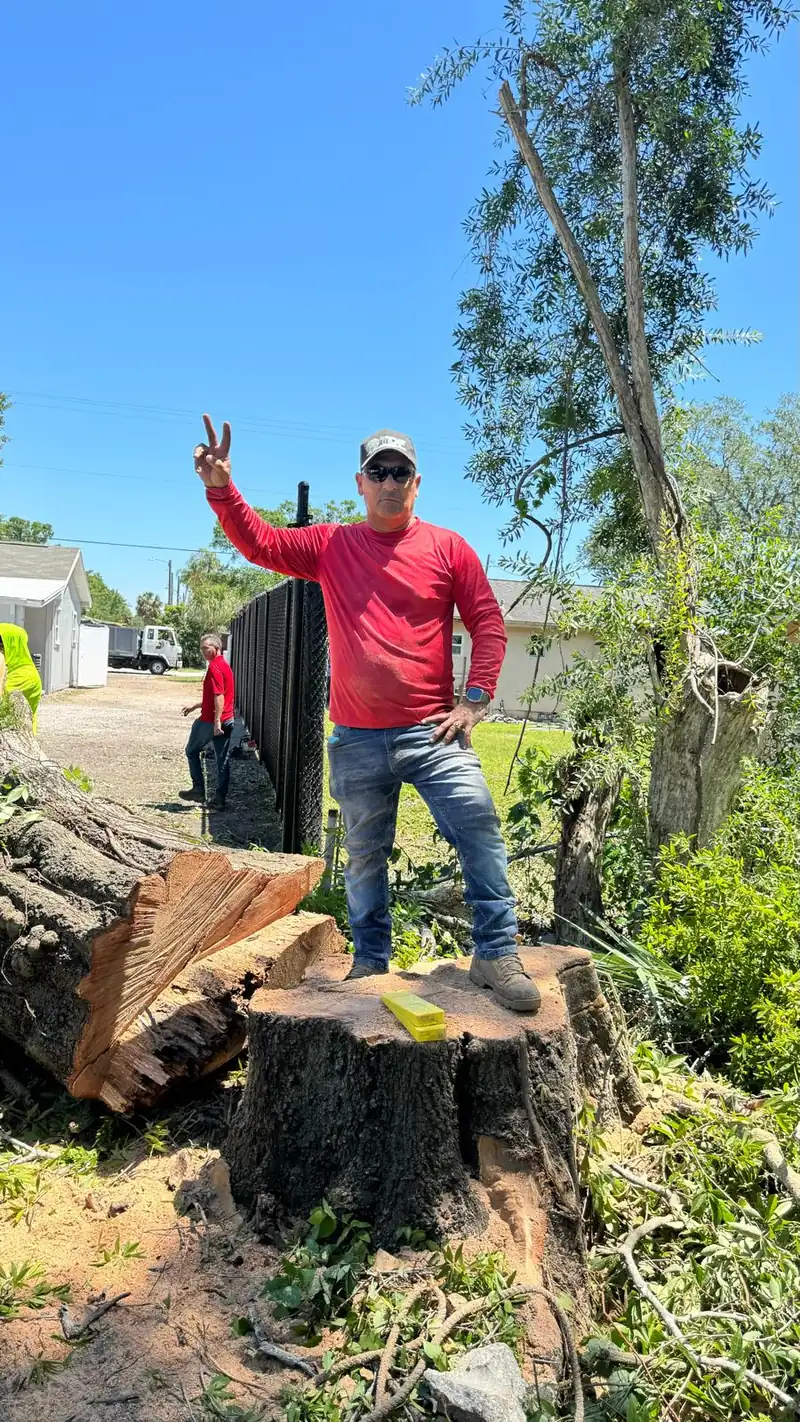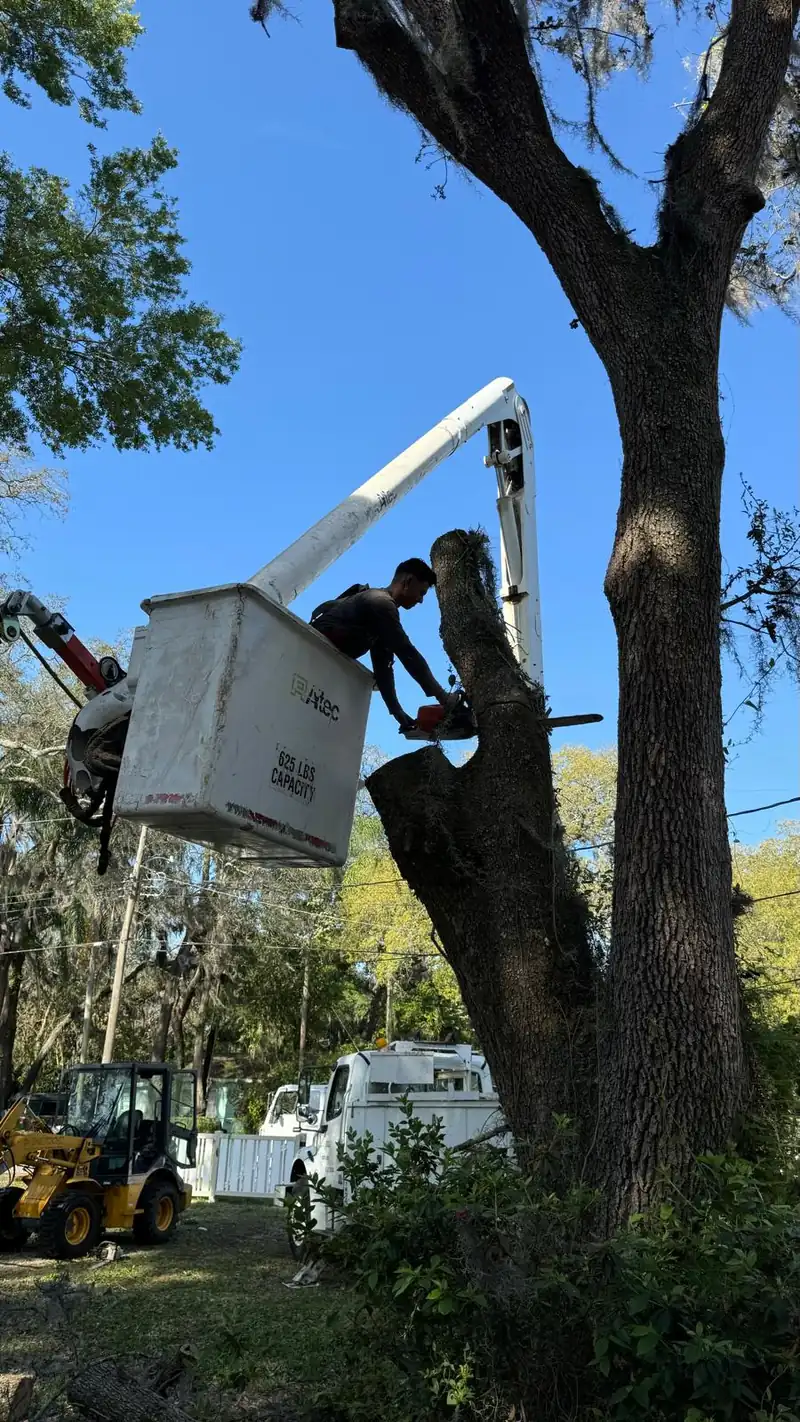
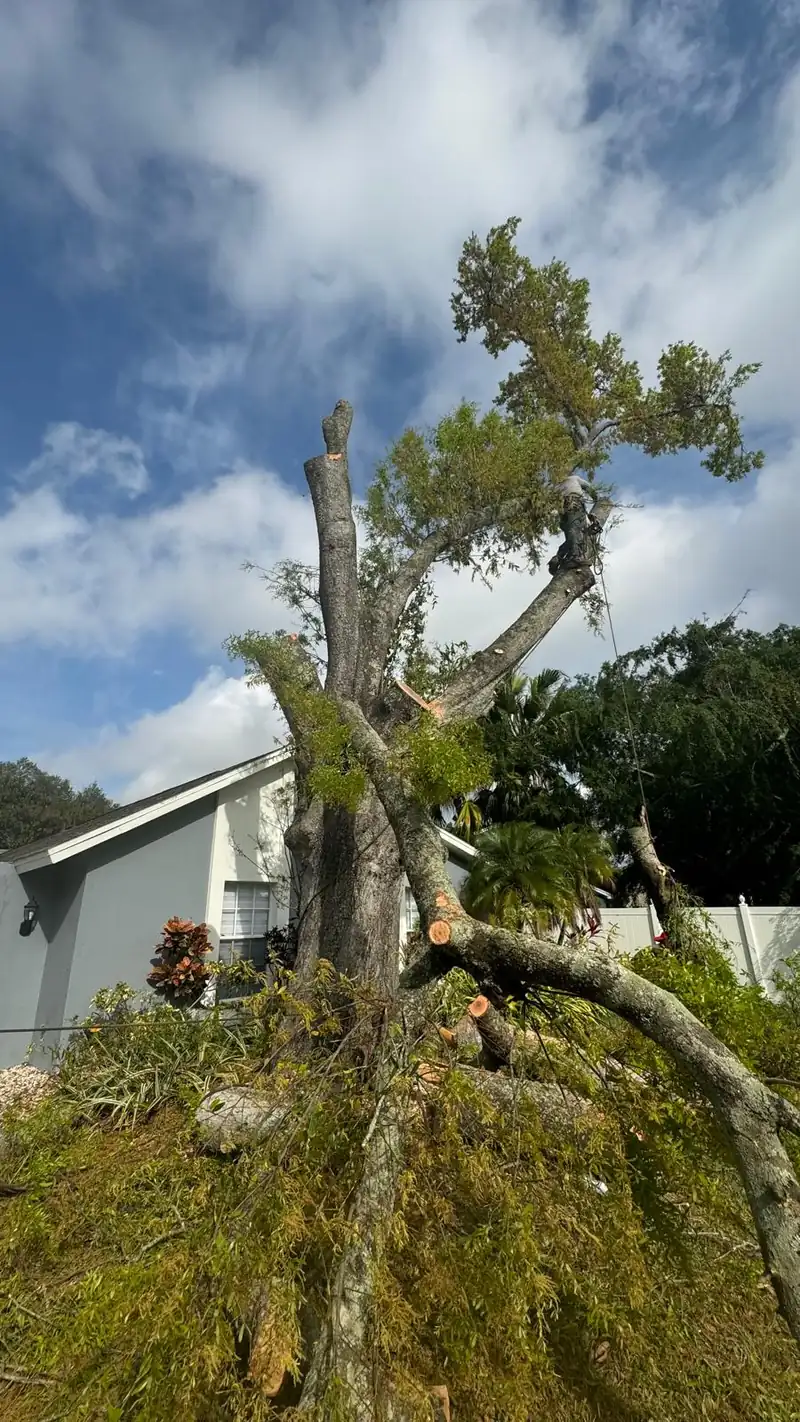
- Controlled sectional removal near structures
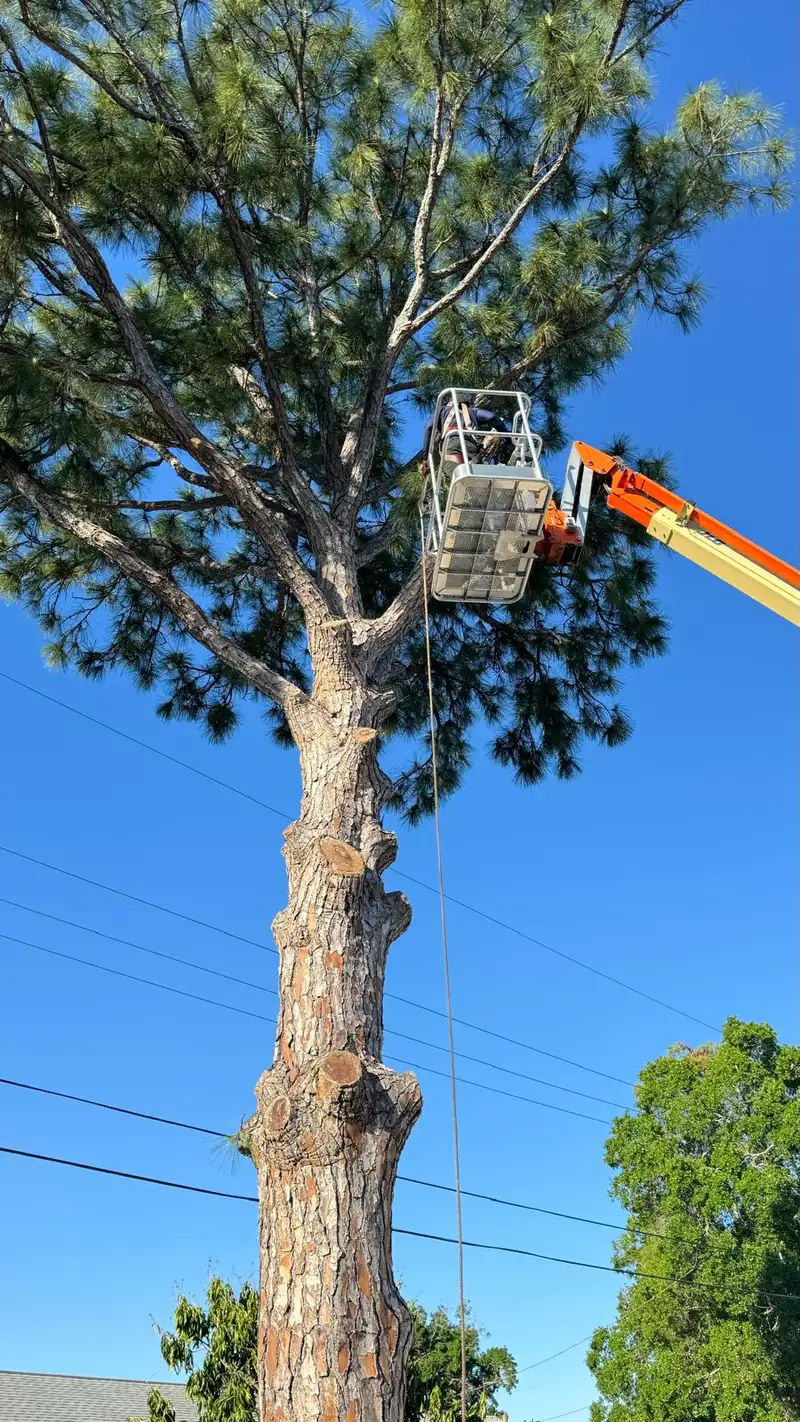
- Bucket truck access to tall trees
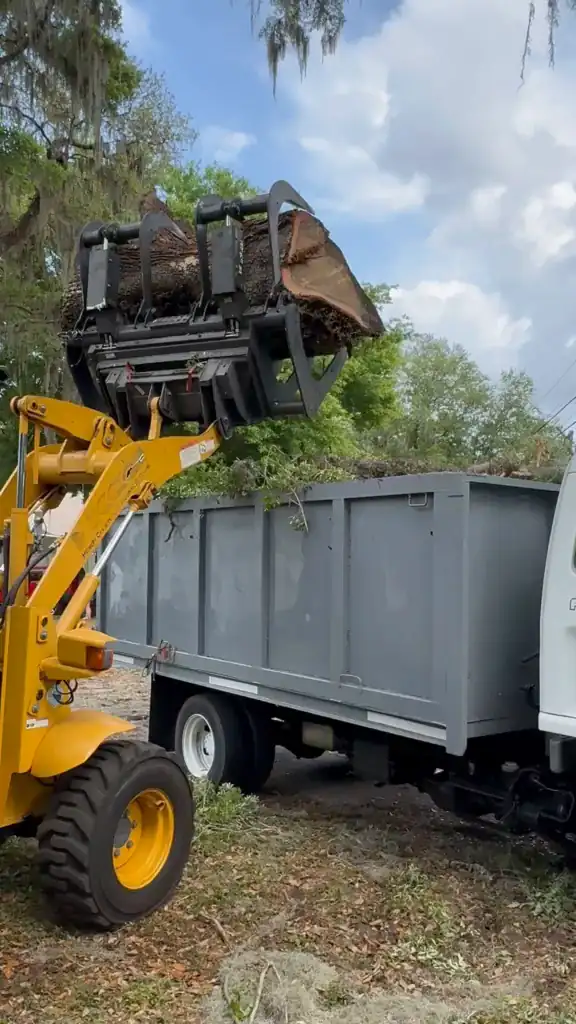
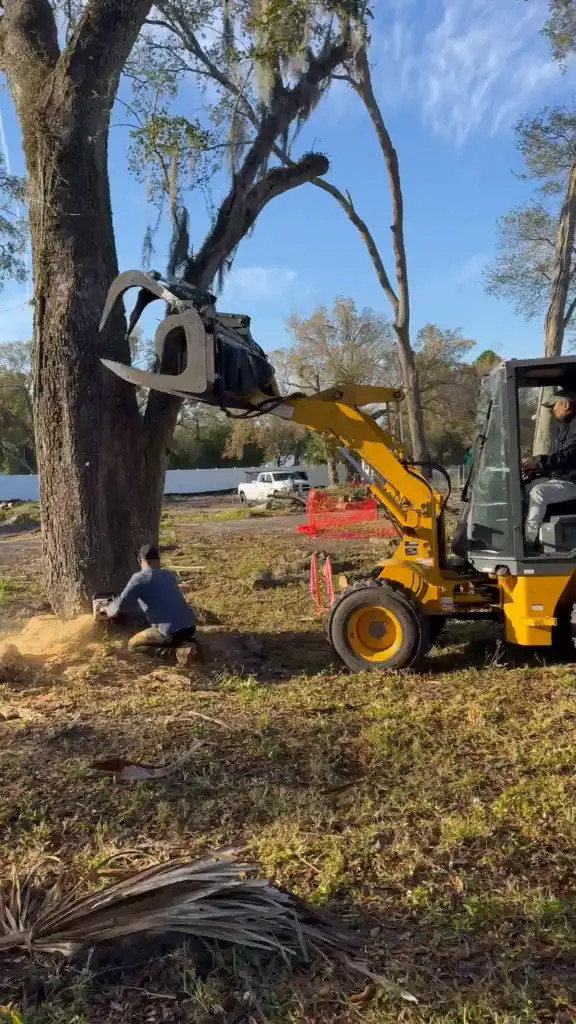
- Log grapple reduces lawn damage
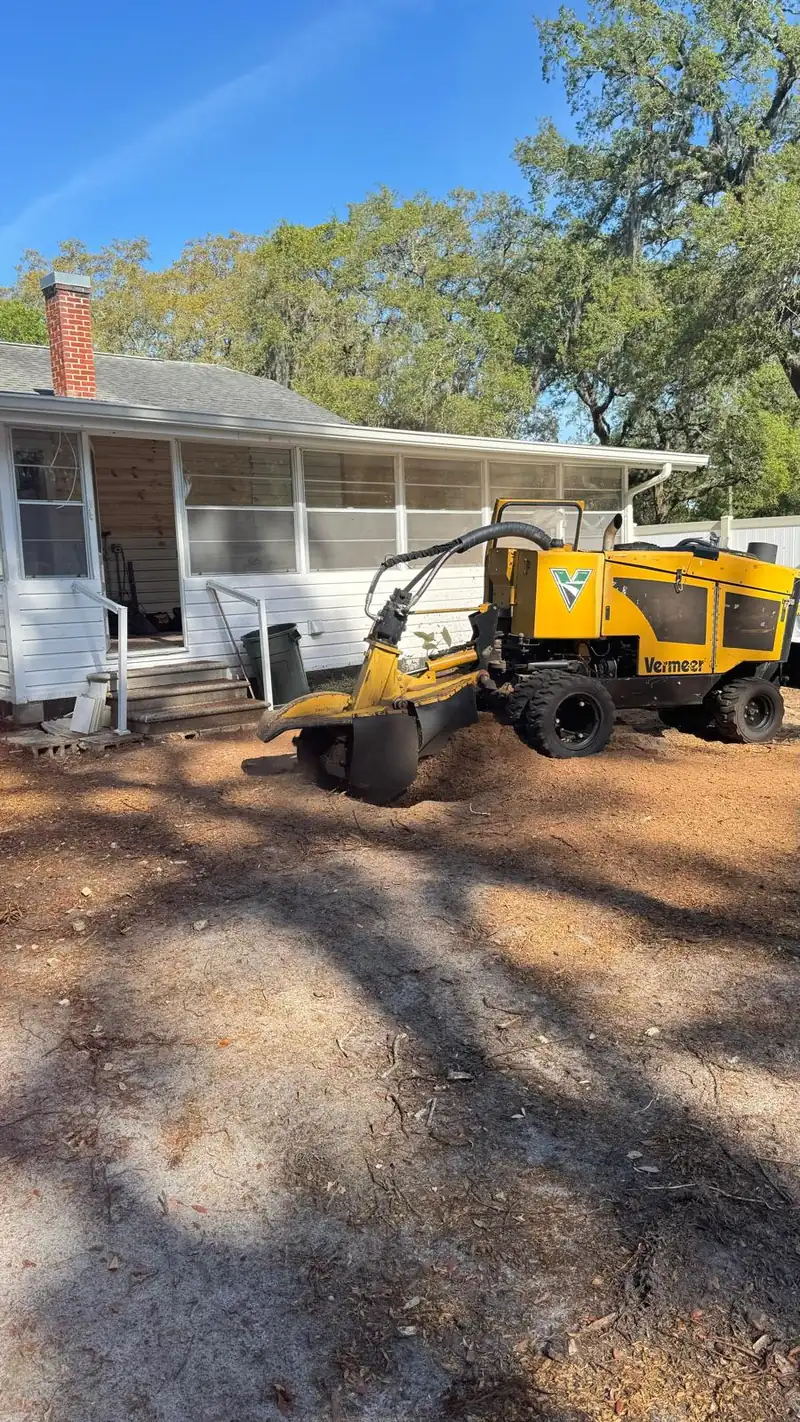
- Stump grinding or full stump removal available the same visit
- Wood and debris hauled away
Signs a Tree Needs to Come Down
Not every troubled tree has to go, but some clearly should. Call for an assessment if you notice any of these:
- The trunk is hollow, split or has large cavities near the base.
- Mushrooms or fungal growth appear around the roots or on the bark.
- The tree has started leaning after a storm, and the soil on one side is raised or cracked.
- Large dead limbs hang over the roof, pool cage, driveway or a neighbor's yard.
- A pine has turned brown from the top down, which often points to beetles or lightning damage.
- The tree is too close to the foundation, or roots are damaging pipes and slabs.
Laurel oaks are a common example in Tampa neighborhoods. They grow fast but often decline from the inside as they age, and they tend to drop heavy limbs in storms. If the problem is limited to a few branches, tree trimming may be enough, and we will tell you so.
How We Take a Tree Down Safely
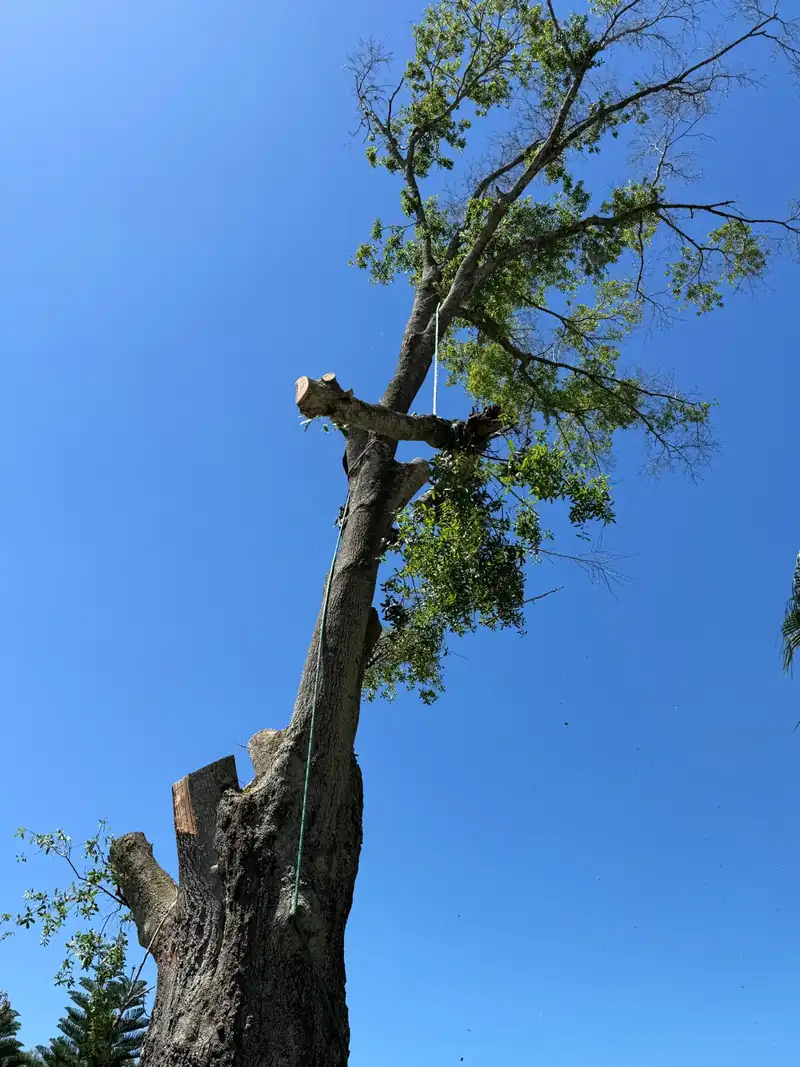
Open space allows a straight fell. Most residential yards don't have that, so we usually dismantle the tree piece by piece. Using our bucket truck, an operator in the bucket cuts limbs and then trunk sections from the top down, controlling where each piece lands. On trees out of reach of the truck, we use rigging and careful chainsaw work to lower sections.
Heavy trunk wood is picked up with a wheel loader and log grapple rather than rolled or dragged, which keeps ruts and scuffs to a minimum. Brush and smaller wood are loaded into our dump trailer. If the tree is near power lines, we will discuss whether the utility needs to be contacted before work starts.
What's Included and What Happens to the Stump
A standard removal includes cutting the tree, loading the logs and branches, and raking and blowing the work area. The stump is left close to the ground unless you choose to deal with it at the same time. You have two options:
- Stump grinding chips the stump down below the soil so you can cover it with dirt and grass.
- Stump removal pulls the stump and main roots out of the ground, which is better when you plan to build or pour concrete in that spot.
If the tree had wide surface roots that are lifting pavers or a walkway, ask about root removal too. For larger jobs with lots of downed wood, our debris removal service clears the remaining material.
Residential, Commercial and Rural Removals
Homeowners call us for dead oaks over the house, overgrown palms and pines that make them nervous in hurricane season. Builders and contractors need trees taken off a lot before foundations go in. HOAs and commercial property managers want hazardous trees cleared from entrances, parking areas and retention pond edges. On ranches and farmland, we remove fallen or dying trees from fence lines, pasture and around barns.
Big jobs with many trees across open acreage often make more sense as land clearing, where we combine removal with mulching and grading.
Tree Removal Across the Tampa Bay Region
From our base in northwest Tampa we cover roughly 100 miles, so we regularly work in places like Lutz, Riverview and Lakeland, as well as Pasco, Hernando and Pinellas communities. Rules on tree removal vary between cities and counties, especially for larger or protected species, so it's smart to check with your local government before scheduling. We can explain what is commonly required.