- Fewer puddles and soggy spots
- Solid, even base for sheds, barns and slabs
- Smoother mowing and safer pasture
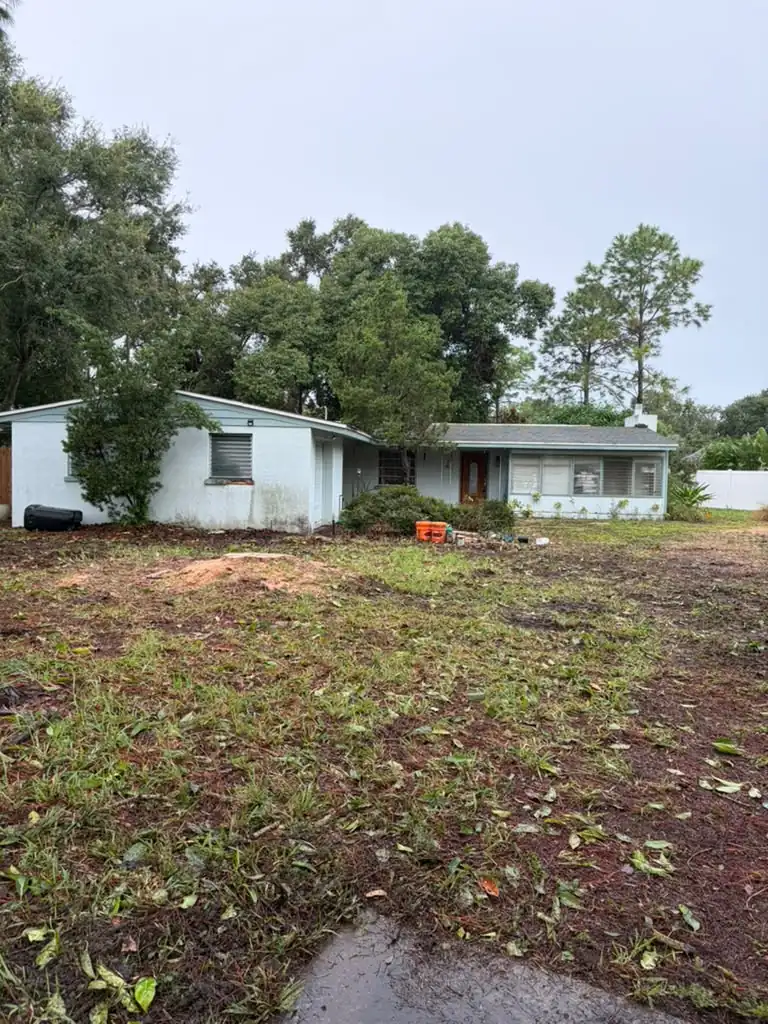
- Stump holes and ruts filled after clearing
- Track equipment suited to Florida's sandy soil
What Land Leveling Means
Land leveling is the work of reshaping the top layer of soil so the ground is even, or sloped at a controlled grade. High spots are cut down, low spots are filled, and the surface is smoothed and compacted. It isn't always about making the ground perfectly flat. In Florida, a slight, planned slope that carries rainwater away from buildings is usually better than a dead-level surface that lets water sit.
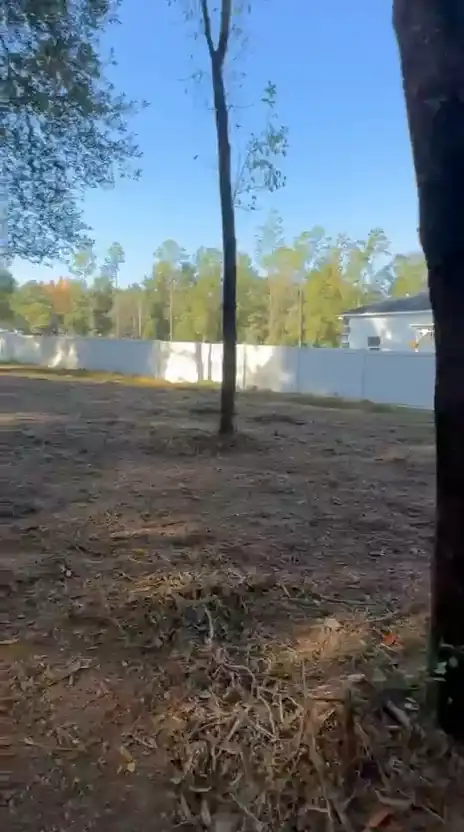
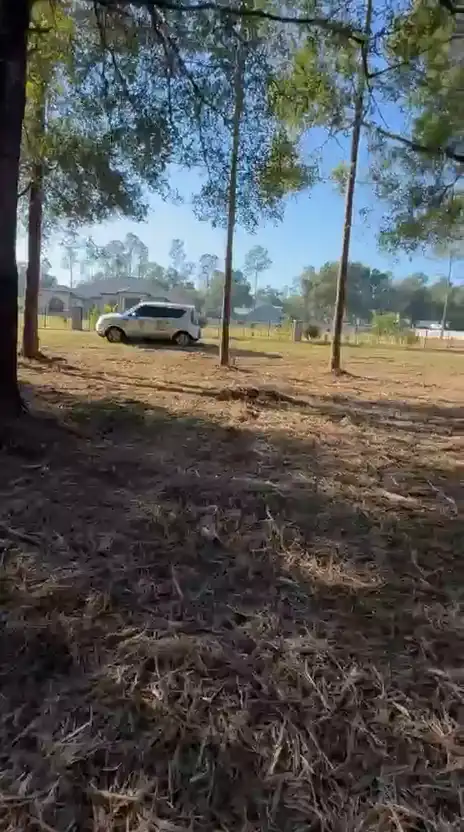
We often level land right after land clearing or stump removal, when the ground is left with holes, ruts and mounds from roots and stumps coming out.
Common Reasons to Level Your Property
- Puddling and soggy areas. Low spots in the yard hold water after summer rains and stay muddy for days.
- Preparing to build. A shed, barn, garage, carport or home addition needs a level, compacted base.
- New lawn or sod. Laying sod over bumpy ground leaves the surface uneven for good.
- Pasture and arena work. Ruts and holes are hard on livestock, horses and equipment.
- After clearing. Stump holes and root pockets need to be filled and smoothed.
- Driveways and parking areas. A level, compacted base makes gravel or shell surfaces last longer.
Equipment and Method
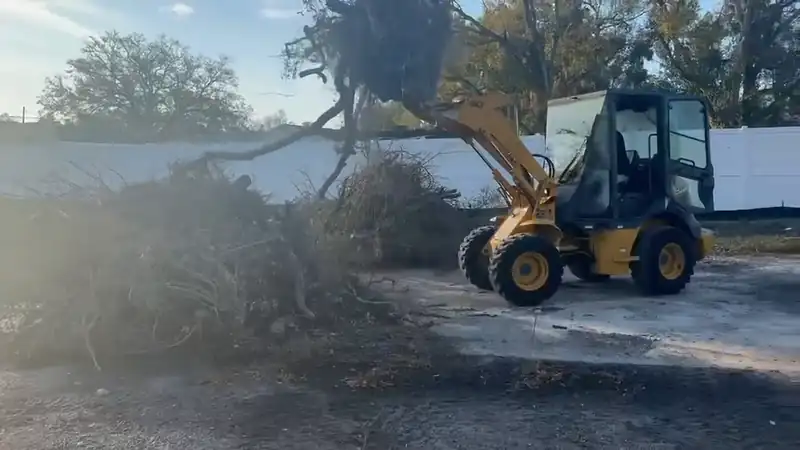
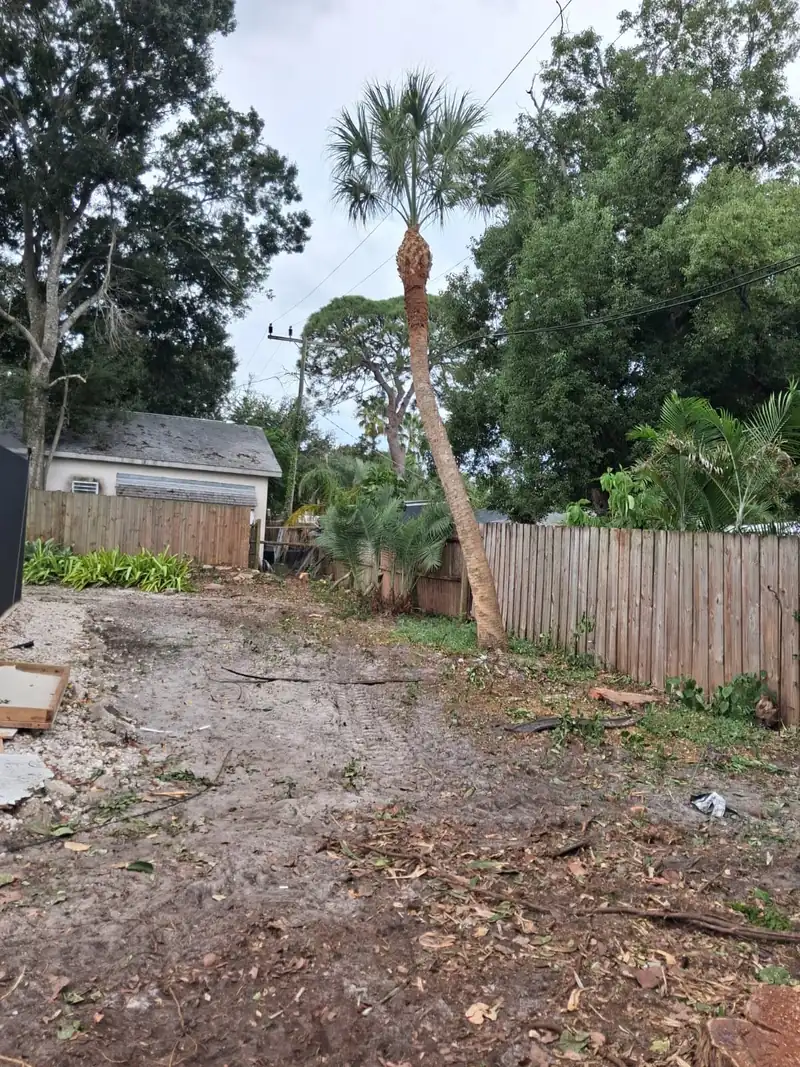
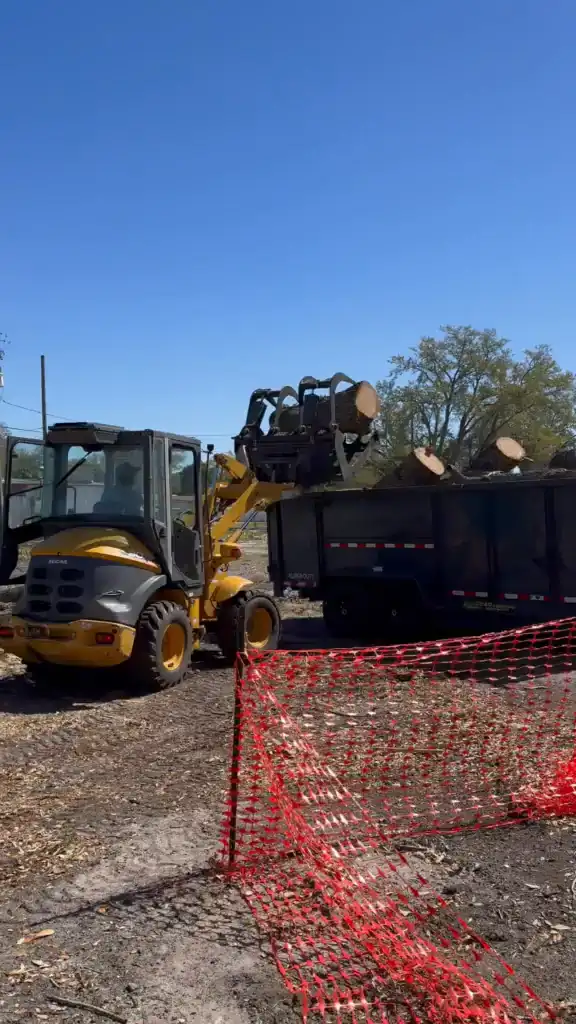
Leveling is done mostly with our compact track loader and grading attachments. The tracks spread the machine's weight, which helps on the loose, sandy soils found across much of the Tampa Bay area and inland counties. We cut and push soil from high spots into low ones, bring in fill where the site is short of material, and back-drag the surface for a smooth finish. Our wheel loader moves larger volumes of soil, and the dump trailer handles excess material.
Before we start, we look at how water moves across the property. The goal is a surface that sheds water toward ditches, swales or retention areas instead of toward your house or barn. If drains on the property are clogged with sediment or debris, that can be addressed with stormwater drain cleaning.
Leveling as Part of a Bigger Project
For builders and owners preparing a homesite, leveling usually fits inside full site preparation, which takes the property from overgrown to ready for a foundation. For rural parcels, we can also grade a driveway or entry path through access road construction. Larger grading projects, engineered building pads and work that changes drainage onto neighboring land may need county approval or an engineer's plan. Check with your county; we can explain what is commonly required.
Residential, Farm and Commercial Leveling
We level backyards for homeowners, pads for sheds and barns, horse and cattle pasture for ranchers, and cleared lots for builders and investors. We work from our base in northwest Tampa throughout a 100-mile radius, with plenty of jobs in places like Thonotosassa, Wesley Chapel and Bartow.