
Tree Work in a City Built Around Its Lakes
Lakeland got its name honestly. Lake Morton, Lake Hollingsworth, Lake Mirror, Lake Parker and dozens of smaller named lakes are scattered through the city, and many of the most desirable homes sit within sight of the water. That setting is beautiful, but it also means a lot of big trees growing in soft, sandy soil close to houses, seawalls, sidewalks and power lines.
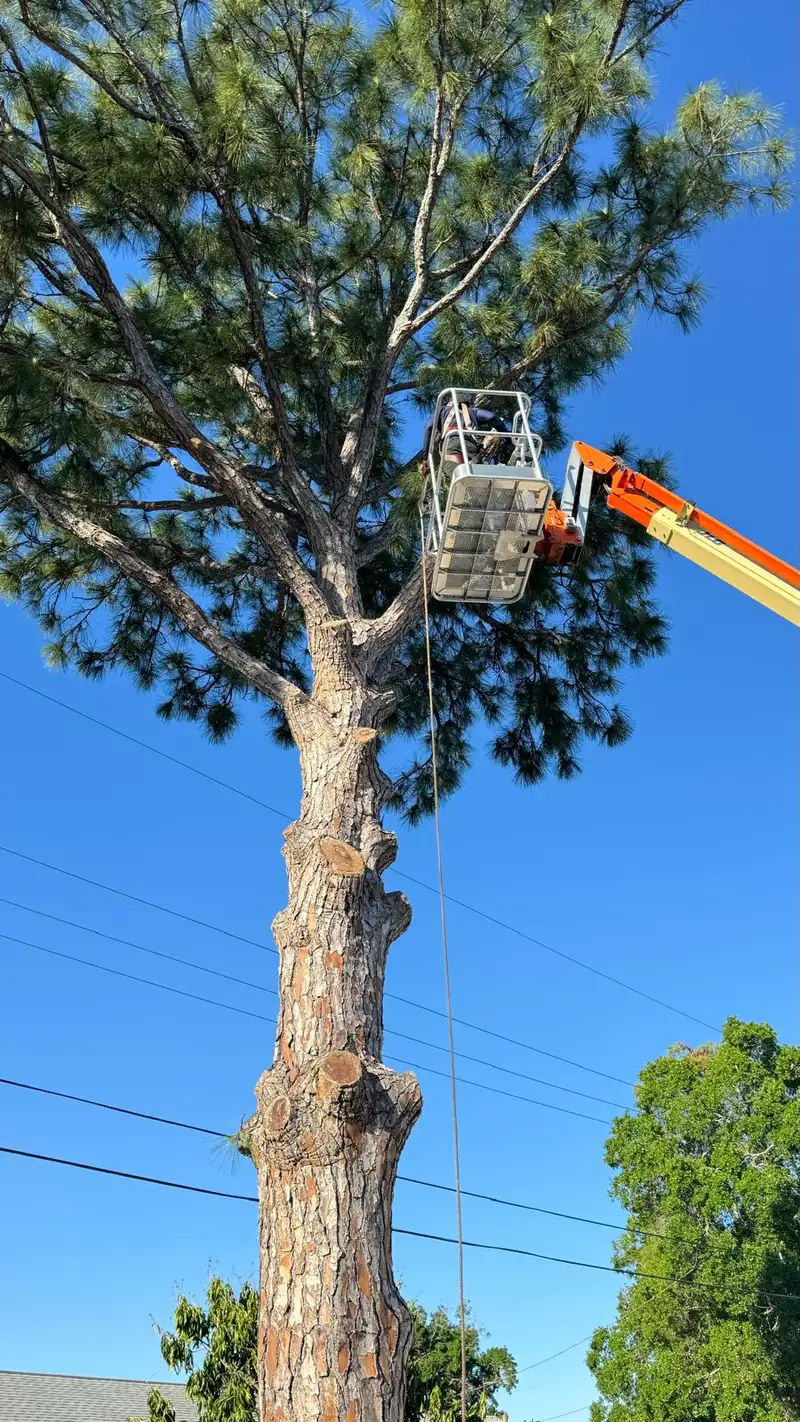
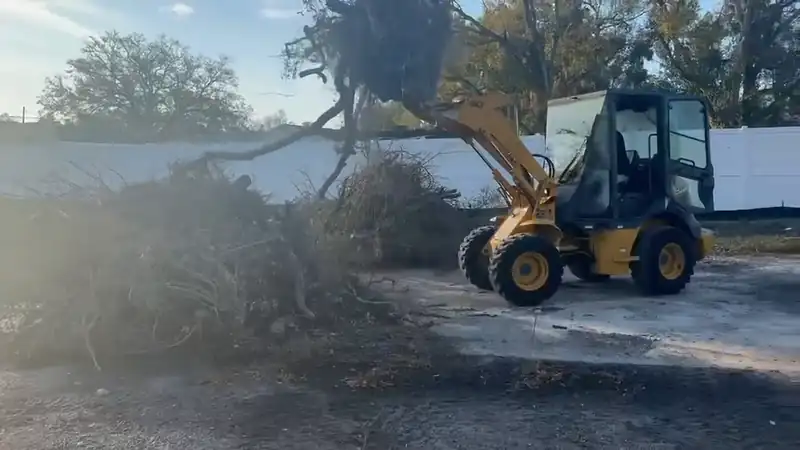
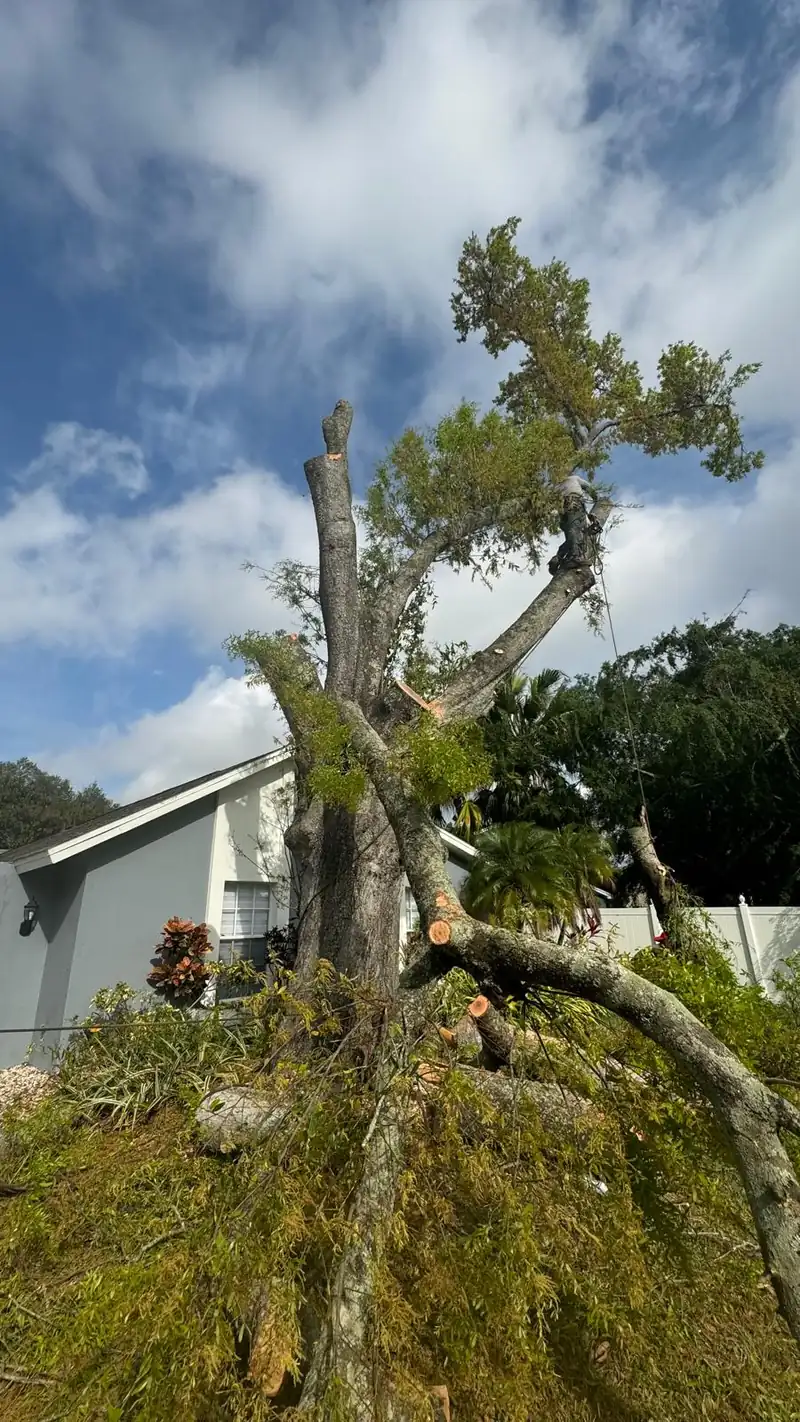
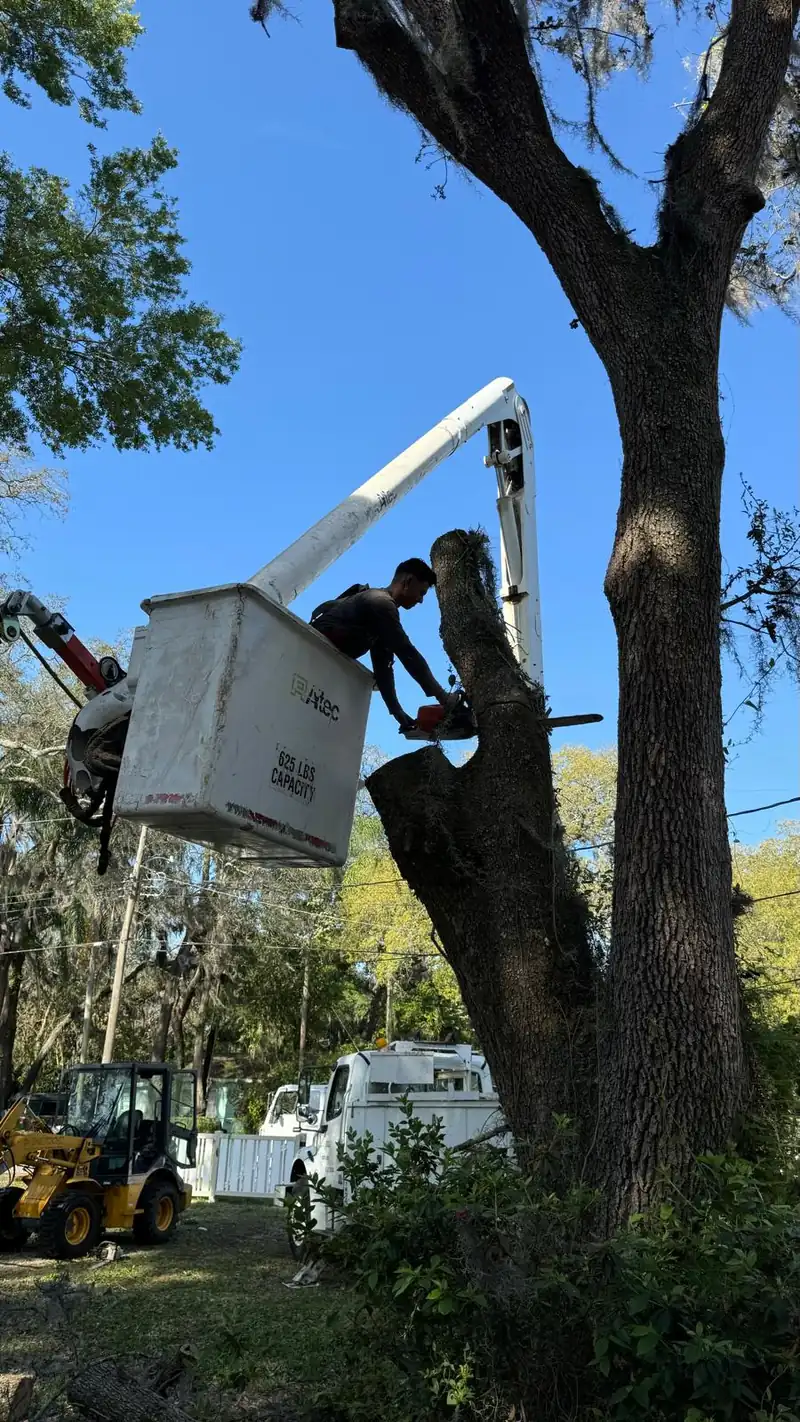
In the older parts of town, near downtown and the Florida Southern College campus, live oaks and laurel oaks have had many decades to spread over roofs and streets. Camphor, slash pine, sabal palm and shoreline cypress fill in the rest. When one of those trees needs to come down or be cut back, the job usually calls for careful rigging rather than simply dropping it. Our bucket truck lets us take a large canopy apart piece by piece over a roof or fence, and a wheel loader with a log grapple moves heavy wood out without dragging it across the lawn.
From Historic Districts to New Rooftops Off the Polk Parkway
Lakeland is really several different places at once, and the tree work changes from one side of town to the other:
- Historic neighborhoods such as Dixieland and the streets around Lake Morton and Lake Hollingsworth, where mature oaks, tight lots and older homes make precise trimming and pruning the most common request.
- South Lakeland and Highland City, with established subdivisions, larger yards and plenty of pines that tend to lean after a wet summer.
- North Lakeland around Lake Gibson and Lake Parker and out toward Kathleen, where half-acre to multi-acre parcels, pasture and leftover grove land are common.
- Growth corridors along I-4, the Polk Parkway, US-98 and SR-33, where new subdivisions, warehouses and distribution buildings keep replacing woods and old citrus rows.
Because Lakeland sits on I-4 roughly halfway between Tampa and Orlando, it has seen steady construction for years.
What Lakeland Customers Ask Us For Most
Most calls from Lakeland fall into a handful of categories:
- Tree removal for dead, storm-damaged or decaying trees, especially aging laurel oaks and pines that lean toward a house.
- Crown thinning and clearance pruning to lift limbs off roofs, open up lake views and keep branches away from service drops.
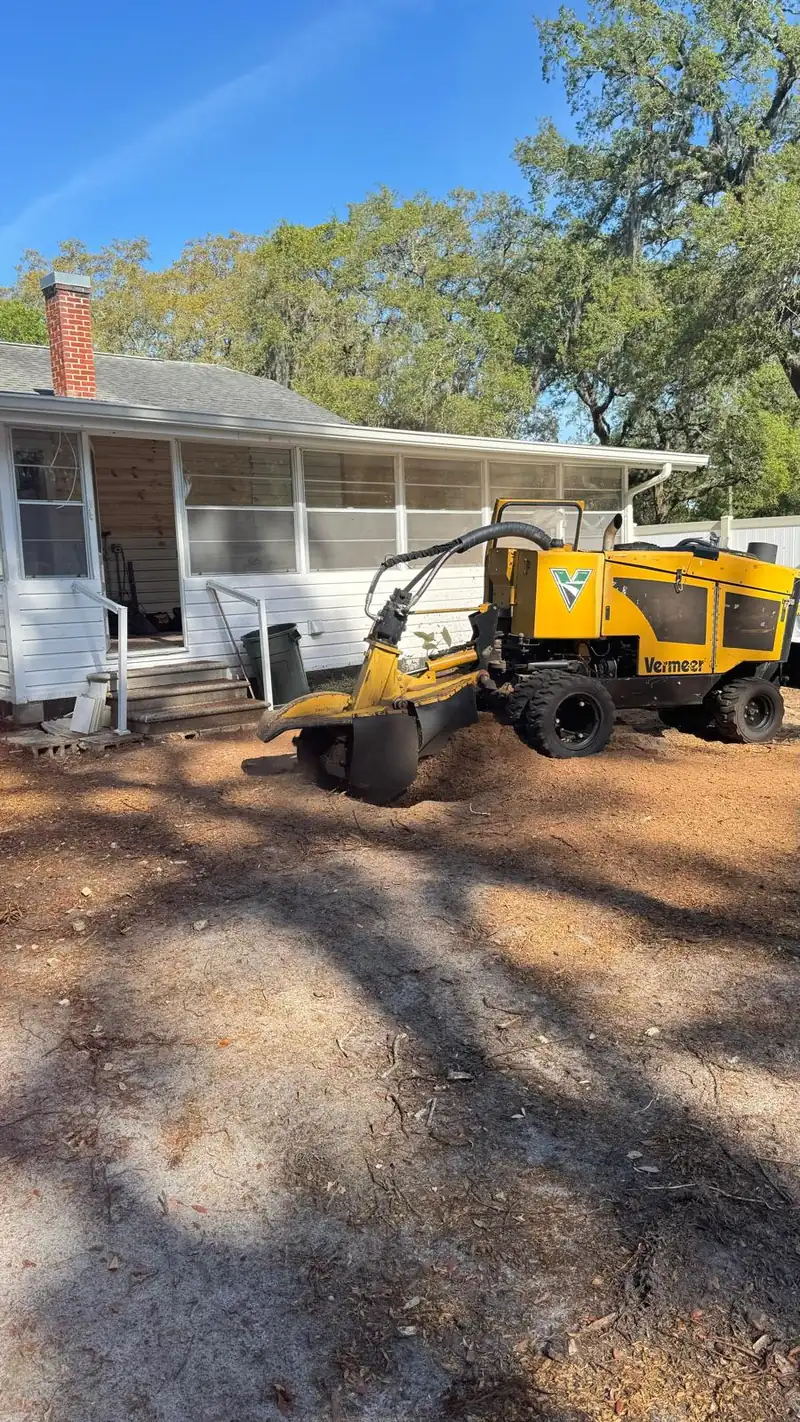
- Stump grinding after a removal so the yard can be sodded, planted or used for a pool or addition.
- Land clearing and site preparation for new homes, shops and commercial pads on the edges of town.
- Forestry mulching to open up overgrown acreage, fence lines and trails while leaving a mulch layer that holds the sandy soil in place.
Laurel Oaks, Lightning and Hurricane Season
Central Florida gets some of the most frequent lightning in the country, and Lakeland is no exception. From June through September, afternoon storms roll in almost daily, and tall pines and oaks near open water take a lot of strikes. A struck pine often dies slowly over the following weeks, turning brown from the top down and attracting bark beetles, so get it inspected early.
Laurel oaks are the other big concern. They grow fast and shade a yard quickly, but many in Lakeland's older neighborhoods are reaching the end of their lifespan and develop hollow trunks and heavy, weak limbs. Recent hurricanes that crossed central Florida brought down a lot of these trees across Polk County. Thinning a crown before storm season, or removing a tree that is clearly in decline, is far cheaper than repairing a roof.
Florida Statute 163.045 carves out an exception for homeowners: when a licensed landscape architect or ISA-certified arborist puts in writing that a tree is dangerous, no local permit is required. Otherwise, check with the City of Lakeland or Polk County, and we can explain the usual steps.
Clearing Acreage on the Outskirts
Outside the city core, the work shifts from single trees to whole parcels. A former grove may still have rows of dead citrus, tangled vines and volunteer oaks. Pasture often hides palmetto, brush and scattered pines along the fence line. For these jobs we choose between two main approaches:
- Full clearing with a track loader and grapple, removing trees, stumps and roots so a builder can grade and pour.
- Mulching in place with a forestry mulcher head, which knocks down brush and small trees without piling and burning and is ideal for lot clearing, trails and selective thinning.
Wetland edges and lake buffers can carry their own rules, so we recommend confirming any setbacks with the county before work starts. Once the land is open, we can level it, cut a driveway or access road, and haul debris away.
Why Lakeland Property Owners Call FTDF Services
Our yard is in northwest Tampa, about an hour's drive west along I-4, so Lakeland sits comfortably inside our 100-mile service area. Phones are answered every day of the week, early morning until 10 at night, and every estimate is free. The equipment you will see on a Lakeland job includes a bucket truck, a compact track loader with a mulching head, a wheel loader with a log grapple, a stump grinder and a dump trailer for haul-away. We work in English and Spanish.
We also serve the towns around Lakeland, including Plant City to the west, Auburndale and Winter Haven to the east, and Mulberry to the south. To set up a visit, send us a few details and photos through the contact page.