Planned Neighborhoods, Younger Trees and HOA Standards
Unlike the older coastal towns to the west, most of Trinity has been built since the 1990s. Neighborhoods such as Heritage Springs, Thousand Oaks and Champions Club were laid out with landscaped entries, street trees, golf course views and preserve areas behind many of the lots. That means the typical Trinity tree is younger, often a live oak or laurel oak planted by the builder in a narrow strip between the sidewalk and the driveway, or a cluster of sabal palms near the front entry.
Those trees grow fast in Florida sun and rain. Twenty years in, many of them are crowding roofs, blocking streetlights, lifting sidewalks and dropping limbs onto cars. Most Trinity calls are about getting trees back into shape, not about clearing land.
Getting Tree Work Approved by Your HOA
Many Trinity communities require architectural review before a tree is removed or replaced, and some set rules for how street trees should be pruned. A little preparation keeps things simple:
- Check your community's guidelines or ask the management company what needs approval.
- Get a written estimate from us describing the trees and the work, which many boards accept with an application.
- Ask whether a replacement tree is required and where it can go.
- Schedule the work once approval comes through; we work around your community's allowed hours.
For a tree that has become dangerous, Florida Statute 163.045 can also apply; see the FAQ below.
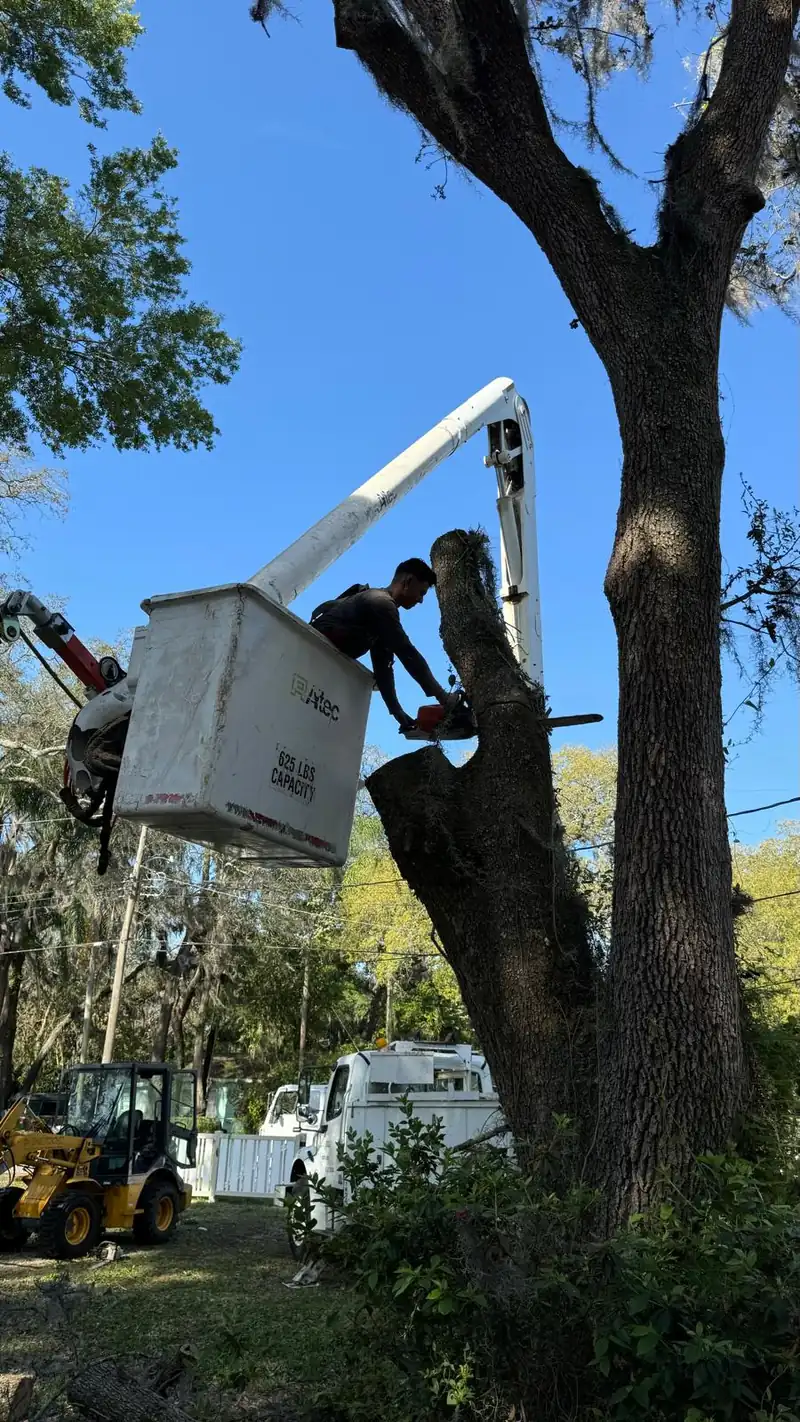
What Trinity Homeowners Book Most
Structural pruning and clearance. Young oaks pruned well now become strong, low-maintenance trees later. Our tree trimming raises canopies over sidewalks and driveways, keeps limbs off roofs and removes competing leaders before they split.
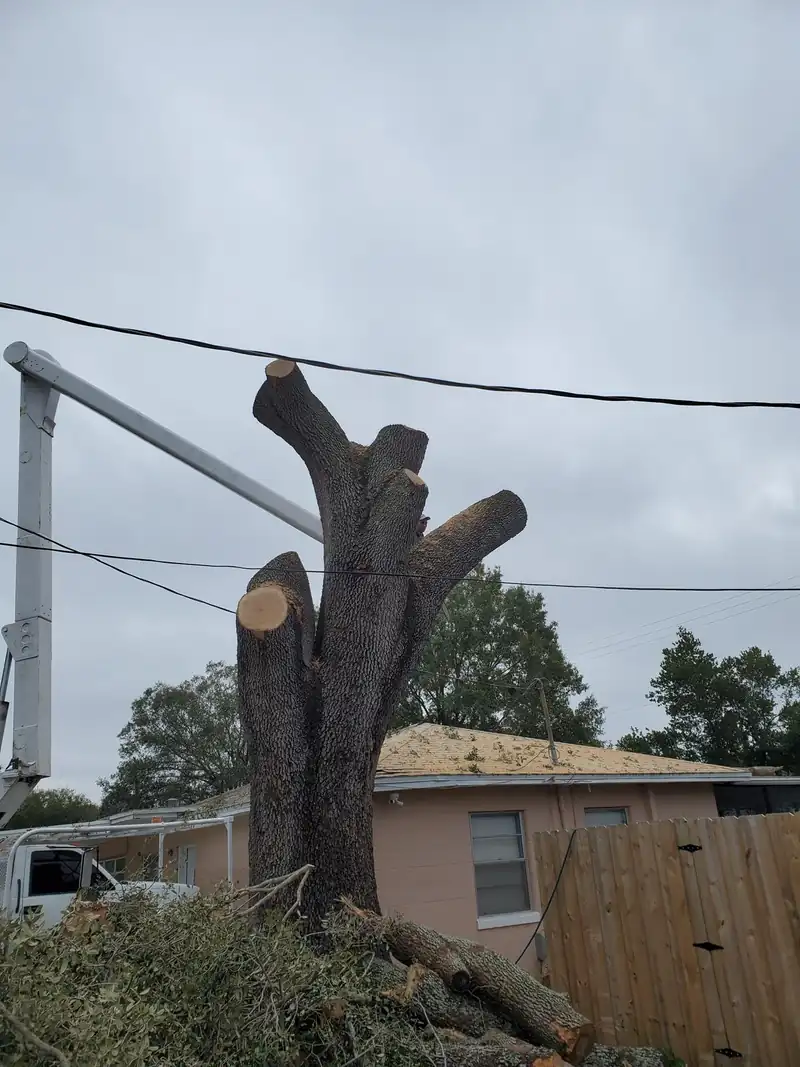
Removing the wrong tree in the wrong place. Laurel oaks planted a few feet from the foundation, or a tree that has outgrown a tiny yard, are good candidates for tree removal and replacement with something better suited.
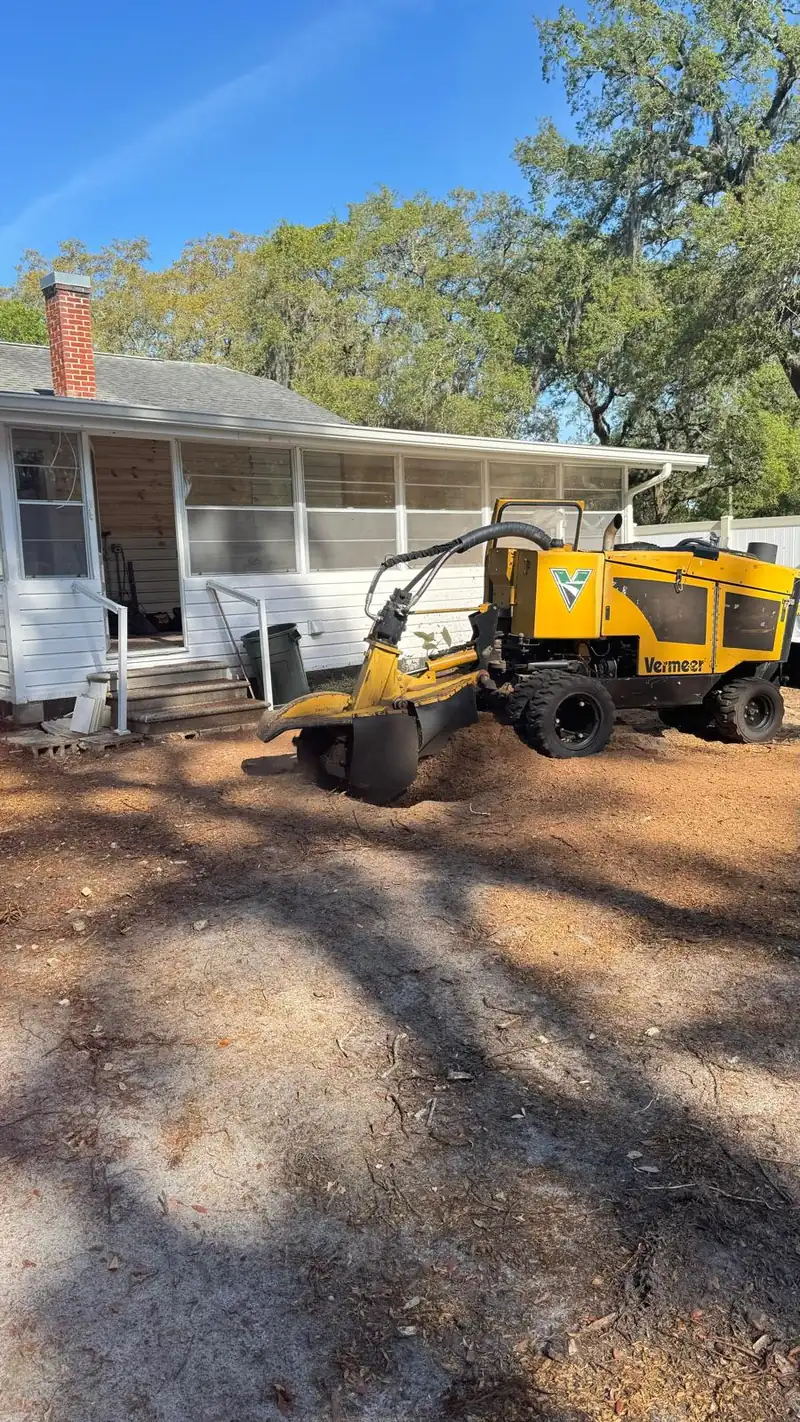
Stumps and roots. After a removal, stump grinding lets you re-sod or replant, and root removal helps where sidewalks, curbs or pavers are being pushed up.
For HOA Boards, Builders and Common Areas
Community associations in Trinity manage entry landscaping, buffer strips along SR-54 and Little Road, retention ponds and drainage swales. Those areas collect overgrowth, fallen limbs and sediment over time. We work with boards and property managers on:
- Pruning and removing trees in common areas and along perimeter walls.
- Stormwater drain cleaning and restoration for overgrown swales, pond banks and culverts.
- Storm cleanup across common areas after high winds.
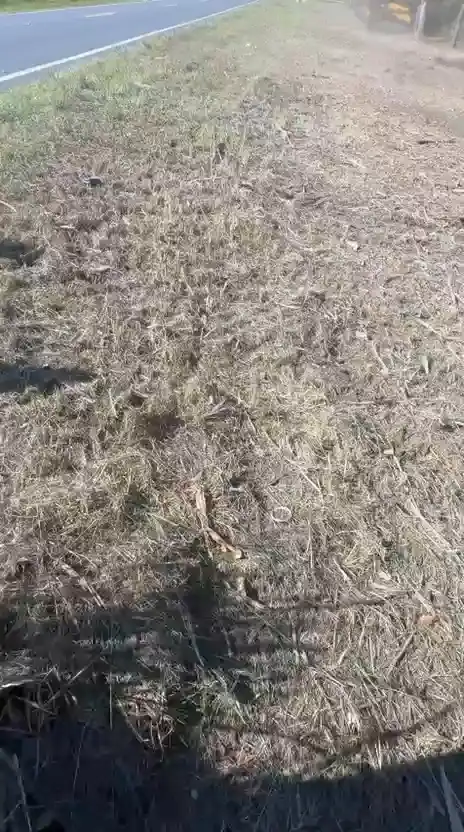
Builders and owners of the remaining open parcels along the SR-54 corridor can also use our site preparation work to get lots cleared and ready for construction.
Storms, Lightning and Preserve Edges
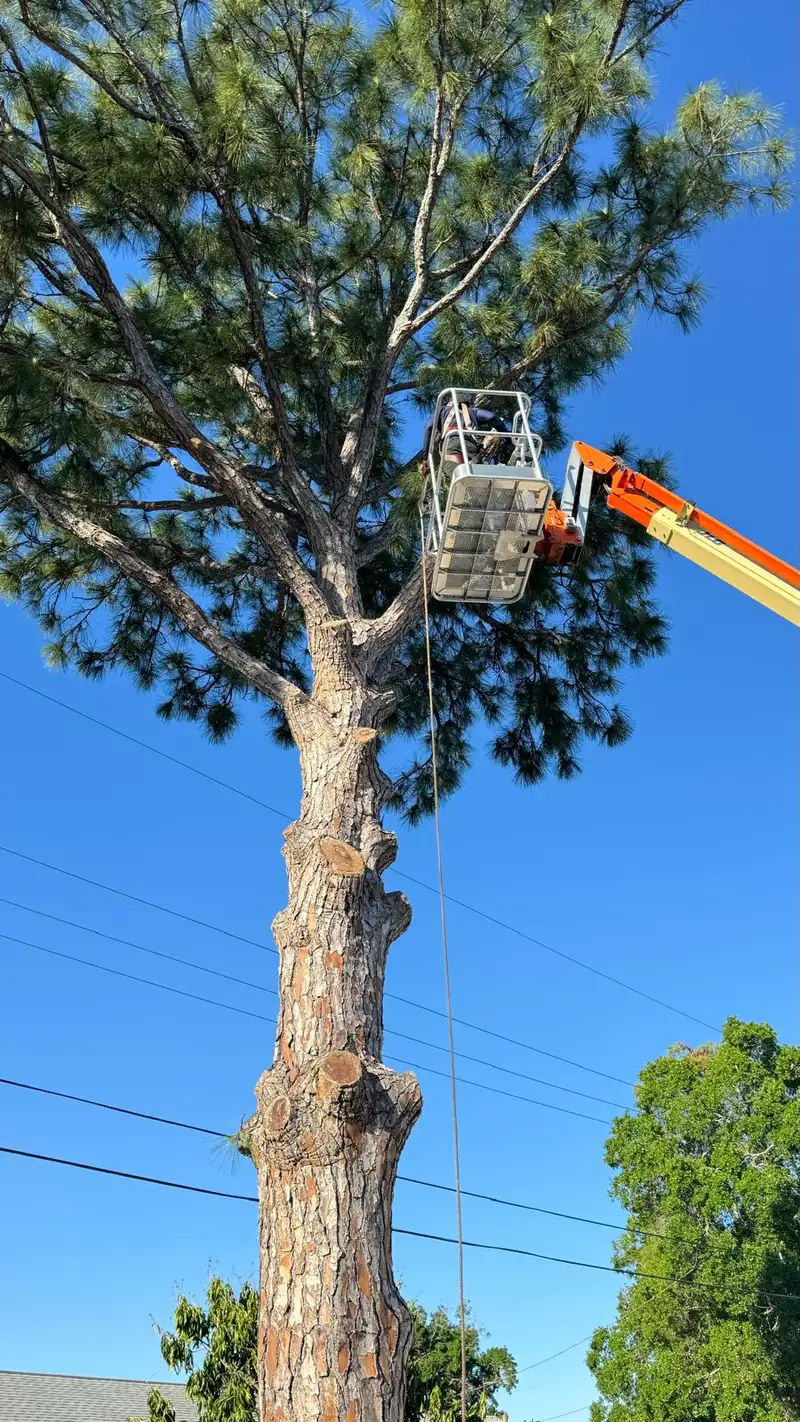
Trinity sits a few miles inland, so it is spared the surge risk of the coast, but hurricane and tropical storm winds still bring down trees here, and summer thunderstorms are frequent. Homes backing onto wooded preserve areas often have tall pines just past the property line, and a lightning-struck or leaning pine there can fall onto a pool cage or fence. Work in protected preserve or wetland areas usually needs permission from the HOA or the county, so we will talk through what is allowed before cutting anything beyond your lot line.
The best preparation for storm season in Trinity is simple: thin and raise young oaks so wind moves through them, remove dead fronds and seed pods from palms, and deal with any tree already leaning toward the house before June. After a storm, we clear trees from roofs, pool cages and driveways first, then haul the debris out of the neighborhood.
Where in Trinity We Work and How to Reach Us
We serve all of Trinity, along SR-54, Little Road, Trinity Boulevard, Mitchell Boulevard and the Suncoast Parkway area, plus the neighborhoods spilling into Odessa to the east and New Port Richey to the west. Our yard is in northwest Tampa, a short drive down the Suncoast, so Trinity is one of the closest Pasco communities we serve. Estimates are free, our crews speak English and Spanish, and the phone is picked up every day, morning until 10 PM. Reach out through the contact page or by phone.