
Old Oaks in Polk County's Oldest Town
Fort Meade traces its start to an Army fort established in 1849 on the Peace River and is often called the oldest town in Polk County. Its historic streets still hold homes shaded by enormous live oaks, many draped with Spanish moss, along with laurel oaks, sabal palms and tall slash pines. Some of these trees were already large when the houses beneath them were built.
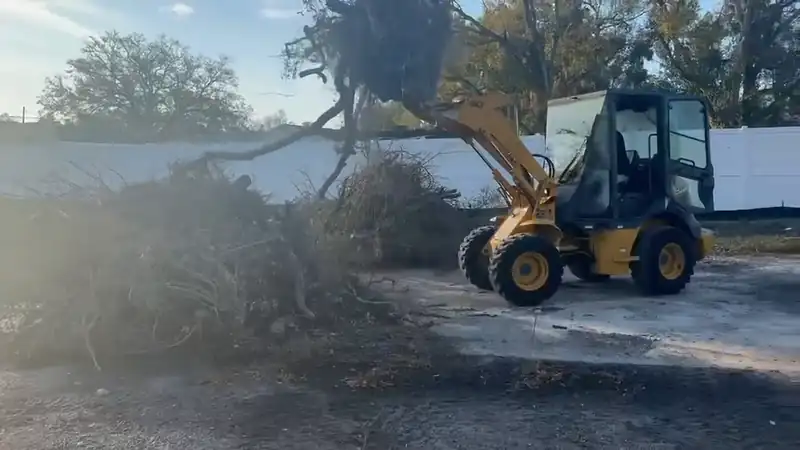
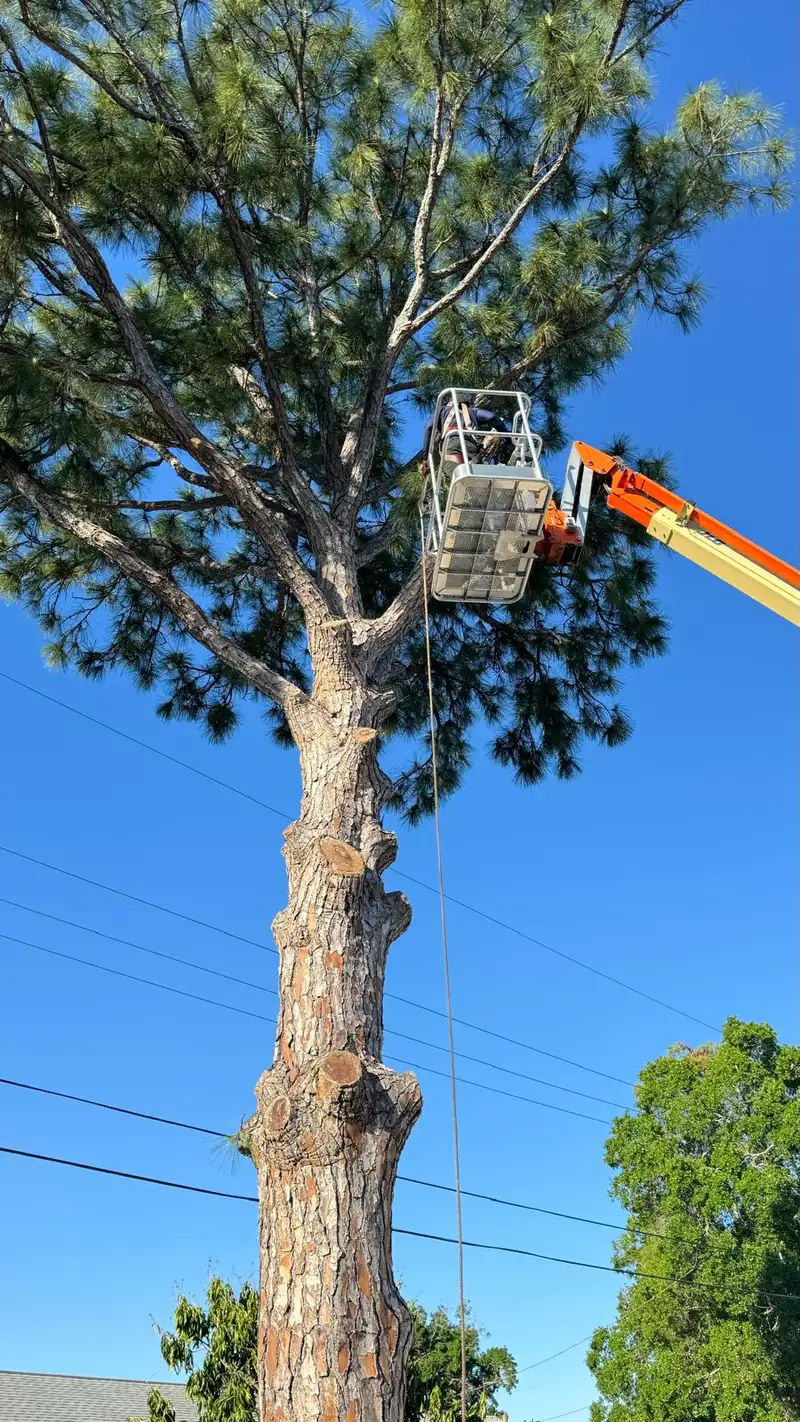
Trees that old deserve a careful hand. Our usual work in town includes opening up heavy, crowded canopies to let storm gusts slip past, removing deadwood that hangs over roofs and porches, lifting limbs off driveways and streets, and taking down trees that have truly failed. With a bucket truck we can lower big limbs one at a time onto open ground, then grind the stump and haul the wood away so the yard looks finished.
Peace River Bottoms and Low Ground
The Peace River runs right along the edge of Fort Meade on its way south toward Hardee and DeSoto Counties. Land near the river and its tributary creeks is low, shaded and often wet, with cypress, red maple, bay trees and thick hardwood hammocks. During a wet summer or after a tropical storm, the river can rise and stay high for days, and saturated banks let big trees topple.
Working near the river means picking the right season and the right equipment. A track loader spreads its weight better than wheeled machinery on soft soil, and we time heavier clearing for drier months whenever possible. Floodplain and wetland areas can be regulated, so it is wise to confirm with Polk County before any clearing close to the water. We can explain what is normally involved.
Pasture, Ranch and Mine-Country Acreage
Outside town, Fort Meade is cattle and phosphate country. Ranches along US-98 and US-17 run cows on improved pasture, while former mine land nearby has been reclaimed and is slowly being put back to work. Both kinds of land have the same enemy: brush that creeps in from the fence line and steals grazing ground.
Here is how we usually help ranch and acreage owners:
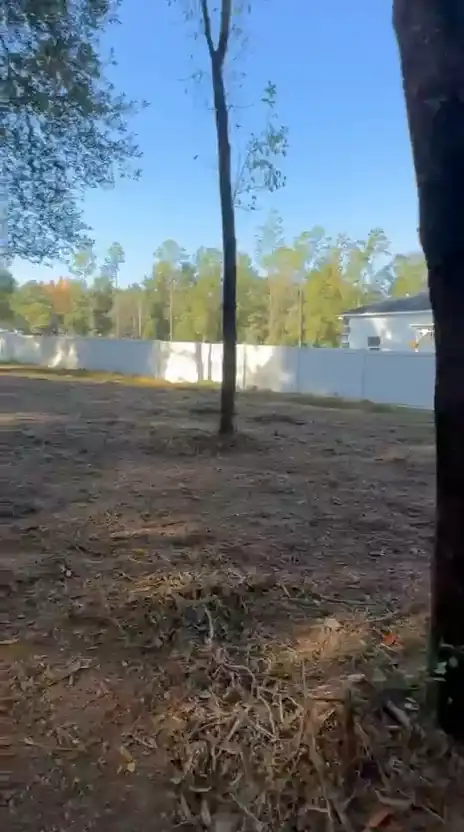
- Pasture recovery. Forestry mulching knocks down Brazilian pepper, wax myrtle, palmetto and young trees so grass can come back.
- Fence line work. Brush clean up opens a clear strip on both sides of the wire so you can build, repair and check fences.
- Ranch roads. Access road construction and grading for gates, pens, barns and back pastures.
- Homesites and barns. Full land clearing, including stumps and roots, for a new house, shop or equipment pad.
Weather That Brings Trees Down
Southern Polk County is a long way from the Gulf beaches, but tropical systems crossing the state still bring sustained winds and inches of rain. Pines snap mid-trunk, oaks lose limbs at weak forks, and trees on wet river ground tip over at the roots. Summer lightning adds to the toll, killing tall pines that then stand dead until the next blow brings them down.
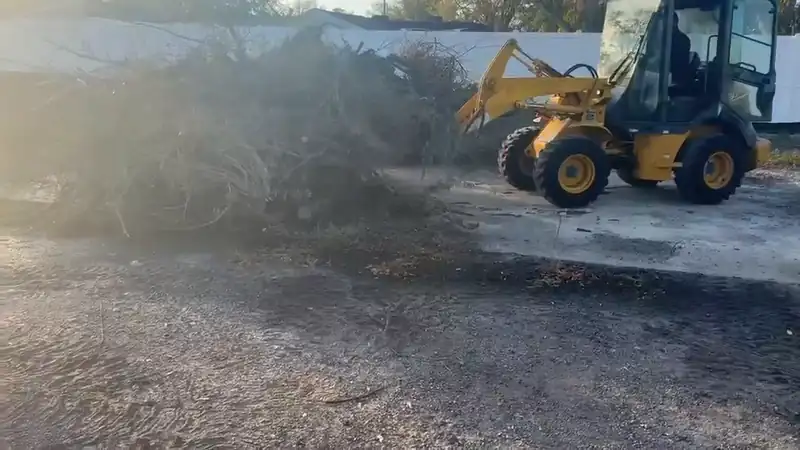
When that happens, we cut up downed trees, clear them off fences and buildings, reopen ranch roads and lanes, and grind or remove the stumps. On the dry side of the year, from late fall through spring, we also mulch brush around homes and barns to cut down on grass fire risk. If a tree near your house looks weak, a tree removal before storm season usually costs far less than cleanup after one.
Bringing Our Crew from Tampa to Fort Meade
Fort Meade is about an hour and a half from our northwest Tampa base, inside the 100-mile radius we cover. Larger clearing projects here often run several days, and we frequently line up nearby work in Bartow, Wauchula and Frostproof on the same trips. Estimates cost nothing and are done in person on your land.
We bring the iron the job calls for: a tracked mulcher for brush and pasture, a grapple loader to move heavy timber, a bucket truck for big yard trees, a stump grinder and a dump trailer. We take calls early and late, every day, and speak English and Spanish. To begin, tell us about the property and attach photos on our contact page.